At Chicago Gold Gallery, we are avid buyers of antique United States currency. Among the most sought-after notes in the market is the renowned US 5 dollar silver certificate, specifically the Series of 1899.
Known affectionately by collectors as the “Chief” note or the Indian 5 dollar bill, this piece of history is one of the most popular denominations to collect. If you have one of these historic notes, we are interested in making you an offer.
How Much Is a Silver Certificate 5 Dollar Bill Worth?
One of the most common questions we receive is: “How much is a silver certificate 5 dollar bill worth?”
Because the 1899 issue was printed well into the 1920s, it is not considered ultra-rare, but it is highly desirable. The value is strictly determined by the condition (grade) of the bill. Below is a general valuation guide based on current market standards:
Choice Uncirculated or Better
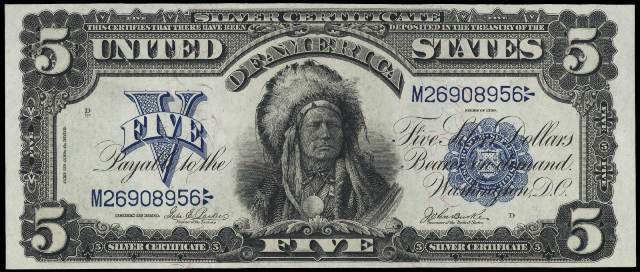
If your note is in perfect condition with no folds, it can be worth thousands of dollars. High-grade examples are incredibly popular and command the highest premiums.
Extremely Fine (XF) to About Uncirculated (AU)
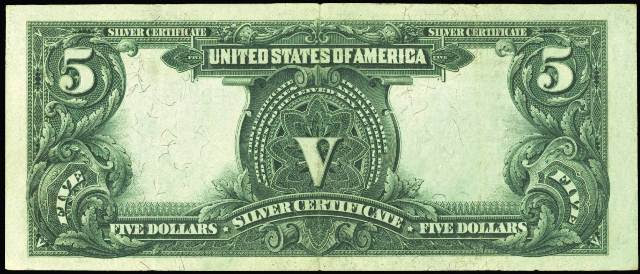
An AU note (perhaps only one fold) or an XF note (two to three folds) is highly collectible. Correctly graded examples in this range often sell for over $1,000.
Fine to Very Fine
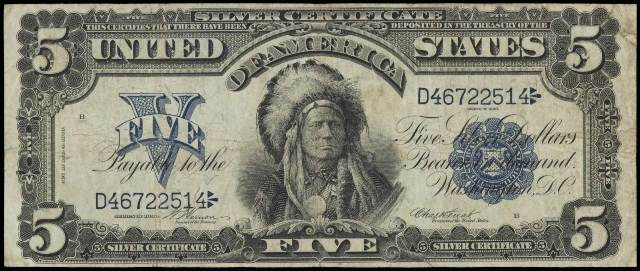
These notes show circulation but remain crisp. A “Fine 12” might be dirty with signs of use, while a “Very Fine 35” may be white with only light folds. These typically range from a few hundred dollars and up.
Very Good and Lower
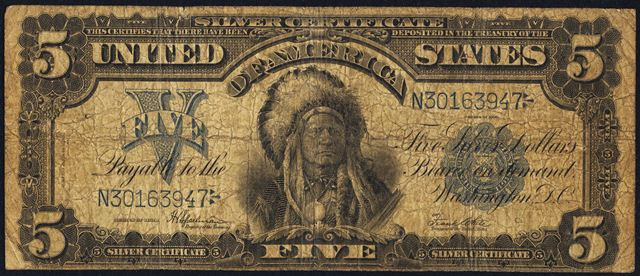
Chiefs In This Grade Sell For well Under $300
Heavily circulated notes with stains, tears, or discoloration are common. These are typically bought to “fill a hole” in a collection and usually sell for under $300.
History of the Indian 5 Dollar Bill
The Indian 5 dollar bill is unique not just for its value, but for its subject. The Native American depicted in a full headdress is not a generic figure; it is a portrait of Chief Running Antelope of the Hunkpapa tribe (Lakota).
Running Antelope passed away in 1896, so he never saw his likeness on the currency. Today, this note bridges the gap between numismatics and American history, making it a centerpiece for many collections.
What We Look For When Buying
When you bring us a US 5 dollar silver certificate for appraisal, we look for specific factors that can increase the value beyond the standard condition grading:
-
Star Notes:
The 1899 series was the first to use star replacement notes (starting in 1910). Early star notes with a solid star symbol (rather than a hole) are exceptionally rare.
-
Low Serial Numbers:
A serial number under 100 significantly increases the value.
-
Signatures:
While there are eleven signature combinations, the Napier Thompson combination often commands a premium in higher grades.
Ready to Sell Your 1899 $5 Silver Certificate?
Whether you have a pristine uncirculated “Chief” or a circulated heirloom, we want to see it. Contact us today to find out exactly how much your silver certificate 5 dollar bill is worth.